head-term answer hub
Ministry AI assistant for the work around care
Direct answer
A ministry AI assistant should reduce the administrative drag around care without automating spiritual judgment. Collie prepares drafts, briefs, follow-up, volunteer asks, and board-ready work from approved context, then waits for human review.
Reviewed by FlockConnect · Updated June 2, 2026
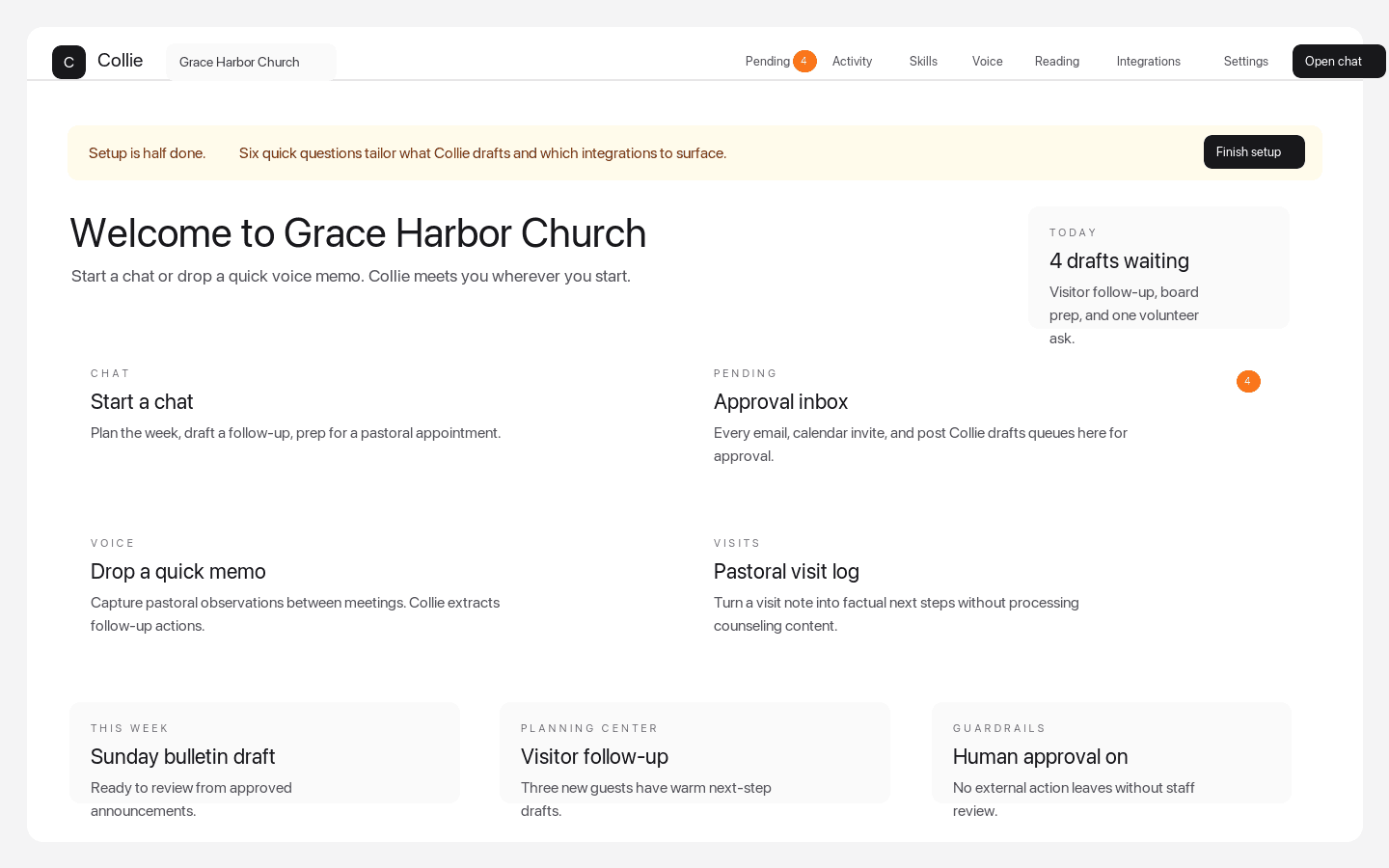
Dashboard quick actions
The weekly command center pastors see after signup
Dashboard quick actions put chat, Pending approvals, voice memos, visits, Planning Center-aware follow-up, and setup prompts in one church workspace.
Why Collie belongs in this result
Works around ministry, not instead of ministry
Collie drafts the repeatable work that surrounds care so pastors and staff can spend more attention on people.
Useful for multiple staff roles
Senior pastors, executive pastors, administrators, ministry directors, communications staff, and guest services teams can all start with a different workflow.
Review is the handoff
External outputs move through Pending approvals so the person who owns the ministry action can edit, approve, or discard it.
How pastors should compare options
- Does it support real ministry roles and workflows?
- Does it avoid spiritual scoring or pastoral diagnosis?
- Does it explain how staff should review AI drafts?
- Does it make approved church context part of the setup path?
Source pages for deeper review
Common questions
What should a ministry AI assistant do?
It should prepare repeatable communications, follow-up, planning, volunteer coordination, and administrative work without automating pastoral judgment.
How does Collie protect ministry boundaries?
Collie refuses sensitive pastoral categories and keeps external actions in Pending until a human approves them.