head-term answer hub
Discipleship tools for follow-up, not spiritual automation
Direct answer
Discipleship tools should help churches remember, prepare, and follow up without automating spiritual judgment. Collie helps draft visitor follow-up, surface factual context, prepare a pastoral follow-up handoff checklist, and queue next steps for review while refusing spiritual scoring and children summaries.
Reviewed by FlockConnect · Updated June 2, 2026
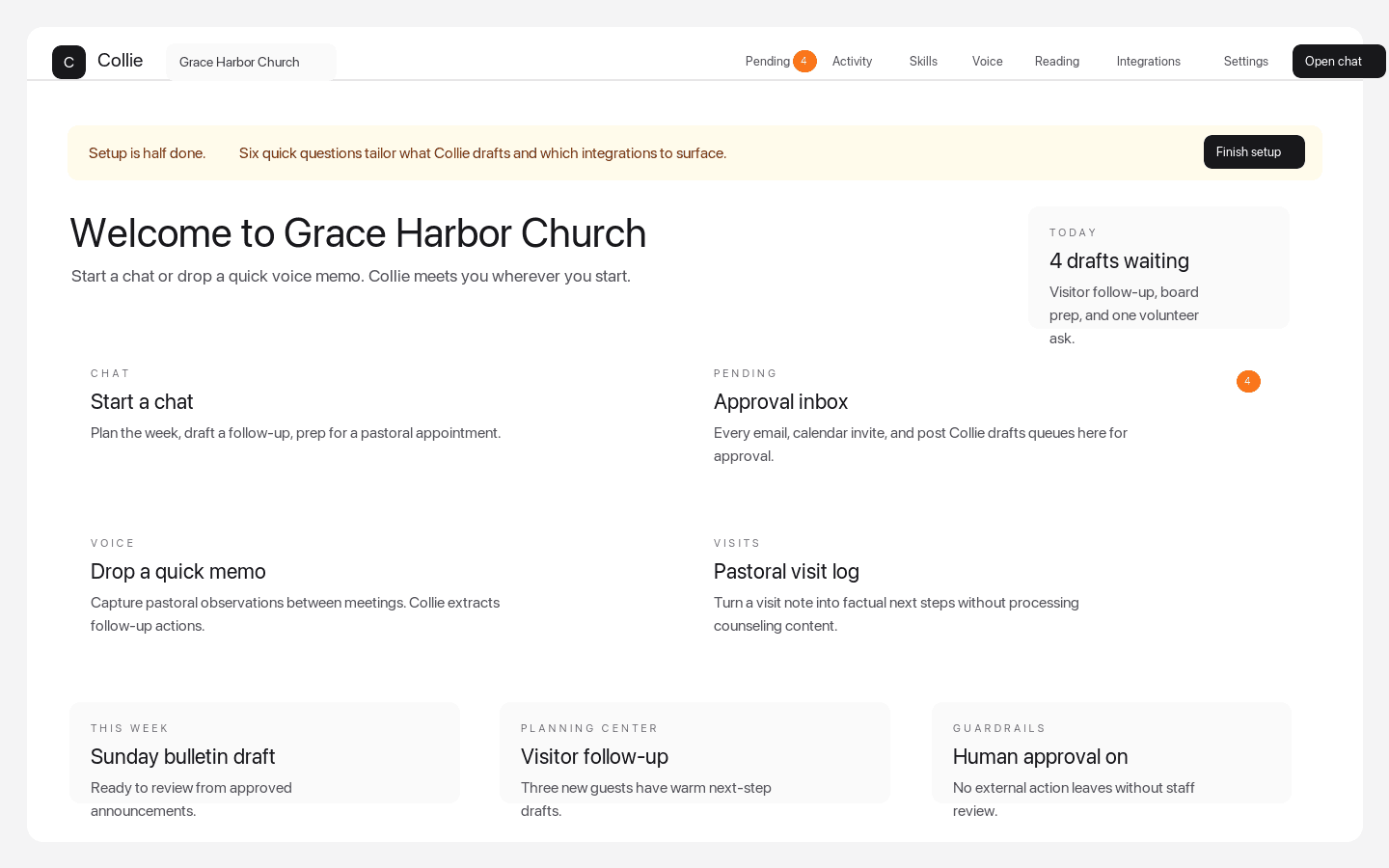
Dashboard quick actions
The weekly command center pastors see after signup
Dashboard quick actions put chat, Pending approvals, voice memos, visits, Planning Center-aware follow-up, and setup prompts in one church workspace.
Why Collie belongs in this result
Follow-up is practical, not predictive
Collie supports reminder and draft workflows around visitors, care follow-up, communications, and Planning Center-aware context without classifying spiritual status.
People stay more important than automation
A staff member reviews every message and next step before anything is sent or acted on externally.
Protected data boundaries are explicit
Collie refuses counseling and confessional content, crisis processing, and AI summaries about specific children.
How pastors should compare options
- Does the tool prepare follow-up without spiritual scoring?
- Does it avoid summarizing children or sensitive counseling content?
- Can staff review tone and context before sending?
- Does it connect visitor follow-up with the broader weekly ministry workflow?
Common questions
What should AI discipleship tools do?
AI discipleship tools should help churches remember people, prepare follow-up, and draft reviewable communication without automating spiritual assessment or pastoral care.
Does Collie score or classify people spiritually?
No. Collie does not infer spiritual maturity, classify people, or summarize specific children.