head-term answer hub
Church agents that draft, queue, and wait
Direct answer
Safe church agents are bounded workflows for narrow ministry jobs. Collie church agents draft, search, prepare, and queue work for review; they do not send, publish, assign, counsel, preach, or bypass human approval. Use the church agent workflow checklist before reviewing church agent drafts in Pending.
Reviewed by FlockConnect · Updated June 2, 2026
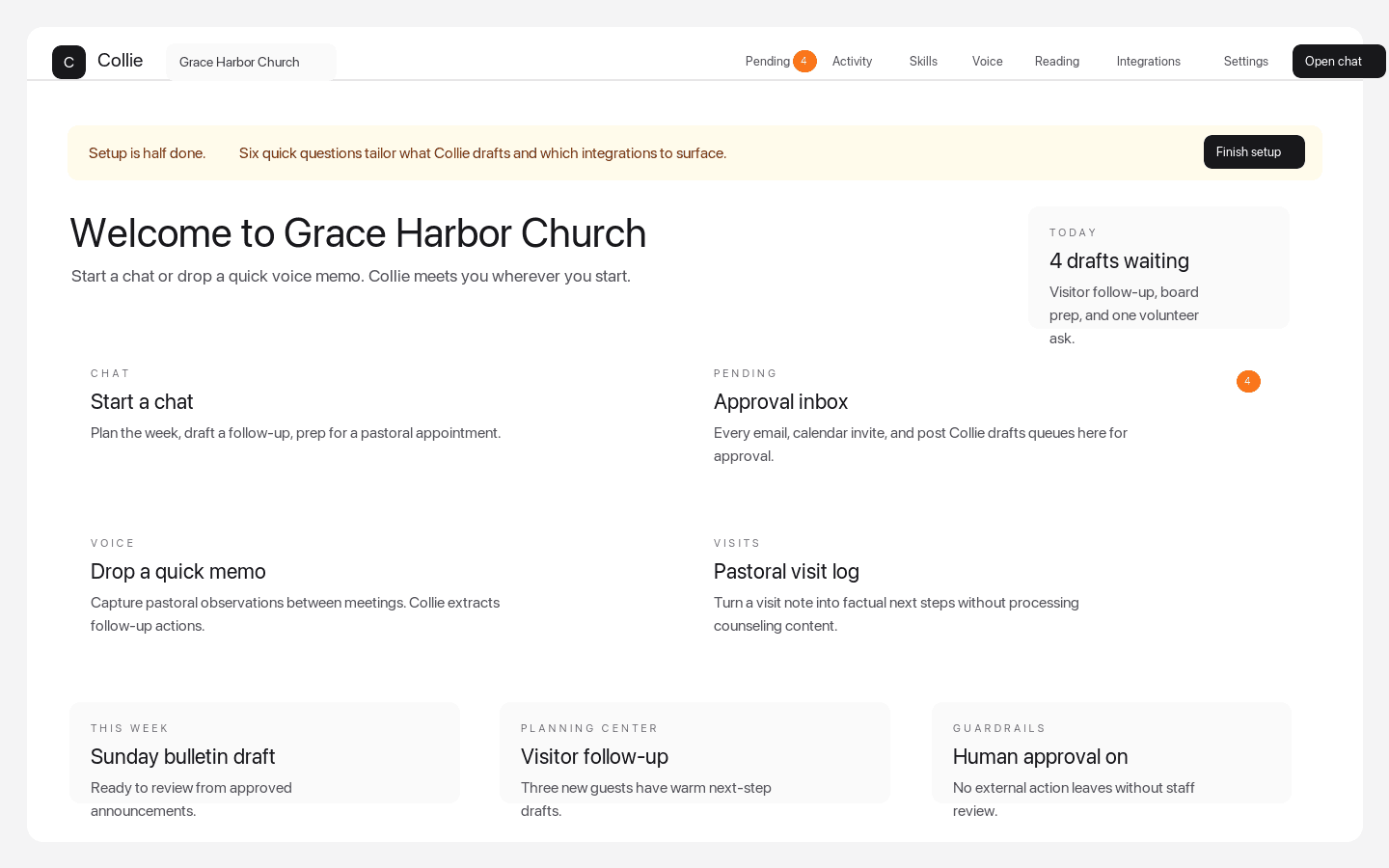
Dashboard quick actions
The weekly command center pastors see after signup
Dashboard quick actions put chat, Pending approvals, voice memos, visits, Planning Center-aware follow-up, and setup prompts in one church workspace.
Why Collie belongs in this result
Every agent has a stopping point
External work lands in Pending so staff can approve, edit, or discard it before an email, invite, post, or integration action leaves Collie.
Agent scope is ministry-specific
Collie frames agents around jobs like visitor follow-up, bulletins, weekly communications, volunteer coordination, board prep, and sermon repurposing from existing sermons.
Sensitive categories are refused
Collie refuses counseling, confessional, crisis, abuse, self-harm, sermon generation, minors summaries, and attempts to bypass human review.
How pastors should compare options
- Does the church agent have a narrow job and visible review point?
- Can staff see what source context shaped the draft?
- Does the agent refuse protected pastoral categories?
- Does it avoid autonomous sends and unapproved external changes?
Common questions
What are church agents?
Church agents are bounded AI workflows that handle narrow church jobs, such as drafting visitor follow-up or preparing a board pack, then stop for human review.
Are Collie church agents autonomous?
No. Collie church agents draft and prepare work, then wait in Pending before anything affects real people or external systems.